contacto@anothereducation.es

English Boarding Schools

Studying English: why and where

English is currently the universal language; Therefore, studying English is necessary and speaking English and writing English is essential in our global world.


While it is true that in our time it is easy to learn English, have access to material to study and / or improve English on the Internet, go to academies where to study English, and of course study English in schools, our educational experience has shown us that there is nothing that exceeds being able to study English abroad. We think it is ideal to do so in the United Kingdom, although other countries such as Ireland, the United States and Canada can also be considered.

Immersion in the English language

We recommend taking a course in an English-speaking country, where the student has an immersion in the English language, both oral and written, that allows him to advance in the knowledge of it. That is why studying a course in an English school, where the student has to interact with their classmates and teachers in English, where the classes are in English, where the written communication path is English, where sports, leisure, in short , all his life turn and relate to the study of English, allow him to progress in a real way while the student develops a lot of relational skills that will contribute to his personal growth.

Studying English: our recommendation

In Another Education it seems ideal that a student will study English at a school during a whole course and that the regime is internship, so the ‘input’ he receives during his stay in the center is full time. Of course you can also go to school every day and live as a family, but this does not seem so advantageous since in a boarding school you are always exposed to the language. In a family you can get into your room and stay there longer than you should, and during the weekends you will not be as forced to get together with your classmates.


Read more

English education system: the national curriculum

The national curriculum of the English education system is divided into five stages (‘Key stages’):

  •   ‘Key Stage’ 1 – Infant and Years 1 & 2: for students between 5 and 7 years old.
  •   ‘Key Stage’ 2 – Years 3 – 6: for students between 8 and 11 years old.
  •   ‘Key Stage’ 3 – Years 7 – 9: for students between 12 and 14 years old.
  •    ‘Key Stage’ 4 – Years 10 – 11: for students between 15 and 16 years old.
  •    ‘Key Stage’ 5 – Years 12 – 13: for students between 17 and 18 years old.

In the English educational system, the years a student studies receive a number. Primary education begins at age 5 in Year 1. Most students begin their secondary education at the age of 11 (Year 7). At age 16 (at the end of Key Stage 4 and year 11) students sit an exam: the General Certificate of Secondary Education (GCSE). The number of subjects that the candidates take ranges from 8 to 10 including in most cases English and Mathematics.

Overseas students in England

However, not all students do these amount of subjects. For instance, Spanish students who do the GCSEs of the English education system must pass at least 4 of the subjects they have taken to validate their studies in the Spanish educational system. In the previous Key Stages it is not necessary to pass any number of subjects, since students automatically continue to do the next course in the educational system of both countries. Key Stage 5 (‘A´Levels’) is for students aged 16-18 (sometimes 19) who take an advanced level final exam after a two-year course. The usual number of subjects taken at this stage is 4.

Before university

Students who wish to continue their university studies in the United Kingdom apply for a place in one or several universities of their choice and it is the universities which ask for results in the A´Levels (Advanced Level). If these results are obtained, the student is offered a place and joins the university. Students in the English education system typically take a ‘gap year’ before starting their degrees.

Read more

English education system

In England, compulsory school age runs from 5 to 16, and young people must stay in education or training until 18. The school year begins in September, ends in July, and is divided into 3 quarters (terms): The ‘Autumn term’ is from September to Christmas, the ‘Spring term’ from January to Easter and the ‘Summer term’ from April to July. In addition, there is a holiday in the middle of each quarter, of a week or ten days depending on the duration of the term. Since the longest term of the education system is usually the first one, the first half term is usually more extensive.


In most schools it is part of the education system to wear a uniform. It seems to be an extra expense, however, we see this as a great advantage. The use of the uniform equals students in the school environment, avoiding comparisons between them in this period of adolescence where the image is so important. It also facilitates mornings since students do not have to think about what to wear.

English academic year

In the English education system, as in Spain, the academic year begins in September. In what both systems differ is that in England, a child born on September 1 is the oldest in the class and the one born on August 30 of the following year, the youngest of that class. In Spain, it starts counting in January. That is, a child born on January 1 will always be the oldest of the class; the youngest, the one born on December 31. For example, in the United Kingdom, children born between September 1, 2021 and August 31, 2022 will go to the same year. However, in Spain the children in the same year will be all those born in 2021.


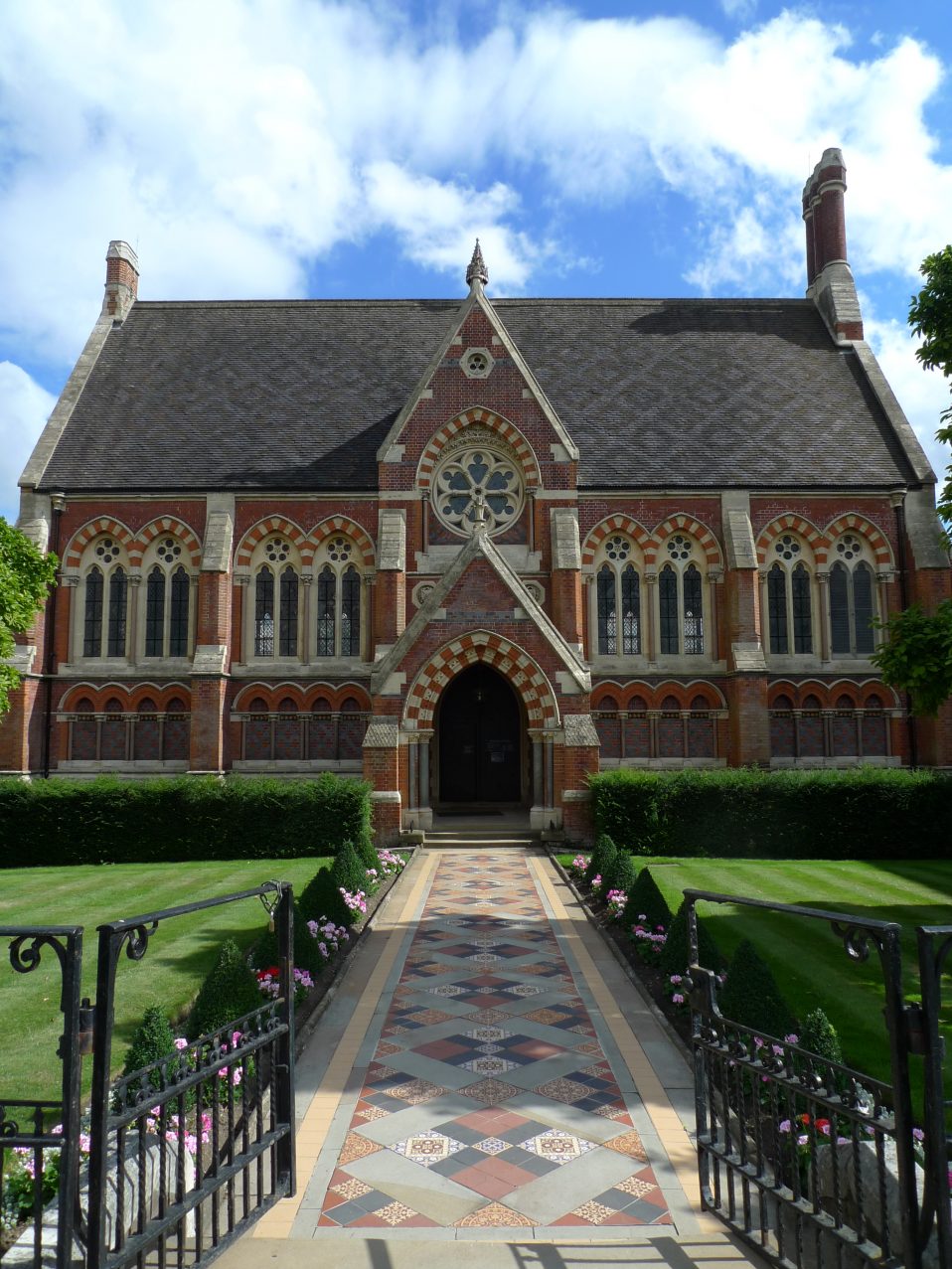
We in Another Education really like the English education system. The United Kingdom has a reputation in the world for its way of educating children for centuries. Here are the famous ‘boarding schools’, where students live in houses or areas of memorable buildings in bucolic fields. There everything is focused on facilitating the acquisition of knowledge and training of students. While it is true that the prices of these schools are high, there are also ‘State Schools’ or public schools whose education is equally excellent. And why do we like them? We like them because the education provided not only has to do with the acquisition of knowledge, but with the development of each student’s own abilities.

Read more

English education system: Year 7

In England, compulsory school age runs from 5 to 16, and young people must stay in education or training until 18. The school year begins in September, ends in July, and is divided into 3 quarters (terms): The ‘Autumn term’ is from September to Christmas, the ‘Spring term’ from January to Easter and the ‘Summer term ‘From April to July In addition, there is a holiday in the middle of each quarter of a week or ten days determined the duration of the same. Since the longest quarter of the education system is usually the first el half term ’of this quarter resulting more extensive.


In most schools it is part of the education system to wear a uniform; It seems to be an extra expense, however, we see this as a great advantage. The use of the uniform equals students in the school environment, avoiding comparisons between them in this period of adolescence where the image is so important; It also facilitates mornings since students do not have to think about what to wear.

The English school academic year

In the English education system, as in Spain, the academic year begins in September. In what both systems differ in England, a child born on September 1 is the oldest in the class and the one born on August 30 of the following year, the youngest of that class. In Spain, it starts counting in January. That is, a child born on January 1 will always be the oldest of the class; the youngest, the one born on December 31. For example, in the United Kingdom, children born between September 1, 2021 and August 31, 2022 will go to class together. However, in Spain the children who will go to class together will be all those born in 2021.


We really like the English education system. The United Kingdom has a reputation in the world for its way of educating children for centuries. Here are the famous ‘boarding schools’, where students live in houses or areas of memorable buildings in bucolic fields. There everything is focused on facilitating the acquisition of knowledge and training of students. While it is true that the prices of these schools are high, there are also ‘State Schools’ or public schools whose education is equally excellent. And why do we like them? We like them because the education provided not only has to do with the acquisition of knowledge, but with the development of each student’s own abilities.

Year 7

Year 7 is a group of the academic year in schools in many countries, including England, Wales, Australia and New Zealand. It is the seventh year (or eighth in Australia) of compulsory education and is roughly equivalent to grade 6 in the United States and Canada (or grade 7 for Australian year 7).


Although Year 7 already enters the Secondary Education cycle, its equivalence with the Spanish educational system is the year before ESO (Compulsory Secondary Education).

Read more

English boarding school: building excellence

Personal attention to each pupil is what best defines education in an English boarding school. In this post we explain how teachers work to develop each child’s abilities and build excellence.

Each English boarding school must meet the standards of quality of education and depending on the results of their students they occupy one or another position in the national ranking of schools, the same for state schools and private schools. Here we have to clarify that education in an English boarding school can be public with a different cost (lower) than private (more expensive). State schools exist, but if your child needs a Child Student visa, or travels as a visitor (for example with an ETA), they cannot enrol at a state school: those routes are for independent schools. The situation is different if the family moves to the UK or the child already has the right to study there. More information: UK Department for Education guidance. English education has, as in Spain, a compulsory educational program that both public and private schools must follow.

The boarding school students in England are composed of international and local students and can be male, female or mixed. The ‘interns’ (called ‘boarders’) are the students who live in the school. The ‘day students’ (‘day boys’ or ‘day girls’) live with their families and return to their homes when the school day ends. The coexistence between boarders and day students in English boarding schools creates a perfect social atmosphere that helps them develop their personal growth. The majority of British boarding schools are mixed, that is, boys and girls attend classes together, but the accommodation is separate.

Building excellence in the English boarding schools

In my experience as an assistant housemistress in an English boarding school, I can affirm that English education stands out in personal attention to the student. I worked there for six years in total (two as a Spanish language assistant and four as an assistant housemistress; in the last of those I also taught English as a foreign language to the girls) and I realised that teachers extol the qualities of boys and girls, enhance each student’s skills and encourage them to work hard to excel at what they do best. They provide classes to reinforce these skills and thus build excellence.

Read more

Studying in England: Guardianship

Most independent boarding schools in England will only offer a place to an international student if they have a UK-based guardian. Each school sets its own rules, so it is worth confirming school by school. The guardian acts on behalf of the parents during the stay and complements the pastoral care the student receives at the boarding school.

It is important to know that the educational guardian is not the child’s legal guardian: it is a UK-based support that parents appoint while their child studies abroad. It can be a person, a family or a specialist organisation.

What the guardian does

  • Available 24 hours for any emergency, such as an illness.
  • Arranges accommodation with host families (homestay) during exeats and half-terms, the weekends and breaks when the boarding school closes, if the student does not travel home.
  • Arranges transport: to and from the airport, to host families and to school.
  • Supports the student: regular visits, pocket money, buying the uniform and help with their social development.
  • Attends school events on behalf of the parents: meetings with teachers, sports events, theatre productions, concerts…

How to choose a guardian: AEGIS accreditation

AEGIS (Association for the Education and Guardianship of International Students) is the body that accredits guardianship organisations in the UK. Choosing an AEGIS-accredited guardian is the easiest way to make sure they meet the standards of the sector. At Another Education we are in touch with accredited guardianship organisations and coordinate the appointment within the admission process.

How much does guardianship cost

The cost depends on the organisation and the level of service. As a market reference, specialist organisations publish prices between £750 and £2,100 per year. We will tell you the exact price of each option before you decide.

Read more